tripp
designed and shipped a mixed reality feature for tripp's ai wellness app to increase user retention
timeline
may – august 2025
role
product design intern
collaborators
trung nguyen
zach krausnick
cody char
daniel kharlas
matthew bracks
tools/skills
ux research
xr development
prototyping
interaction design
context
jump to solutionA VR wellness company creating meditative experiences with AI guidance and stunning visuals.
TRIPP is an award-winning company making mindfulness feel transformative, on nearly every headset and on mobile.
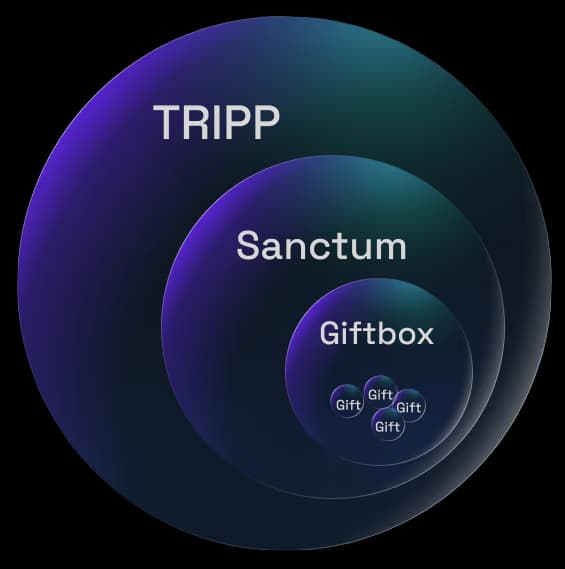
Inside the app is Sanctum, a mixed reality space where users earn gifts (for coming back to TRIPP three times a week) and place them around their physical room.
problem
The gifts were decorative, so nobody came back.
The current gifts in Sanctum sat still and ignored the room around the user. This new gift needed to be a reason to return every day.
01
More sessions, and more time in Sanctum
02
Mindful movement between meditations, using the whole room
03
Interactivity and whimsy, following SPARCS, the six design principles below
SPARCS is the set of design principles every gift is held to. Select a letter to see what it stands for.
01of 06
Sound
Spatial audio that relates sound to emotion.
process
Three concepts went into the headset, one came out.
01prototype
Prototyped in ShapesXR, then graded.
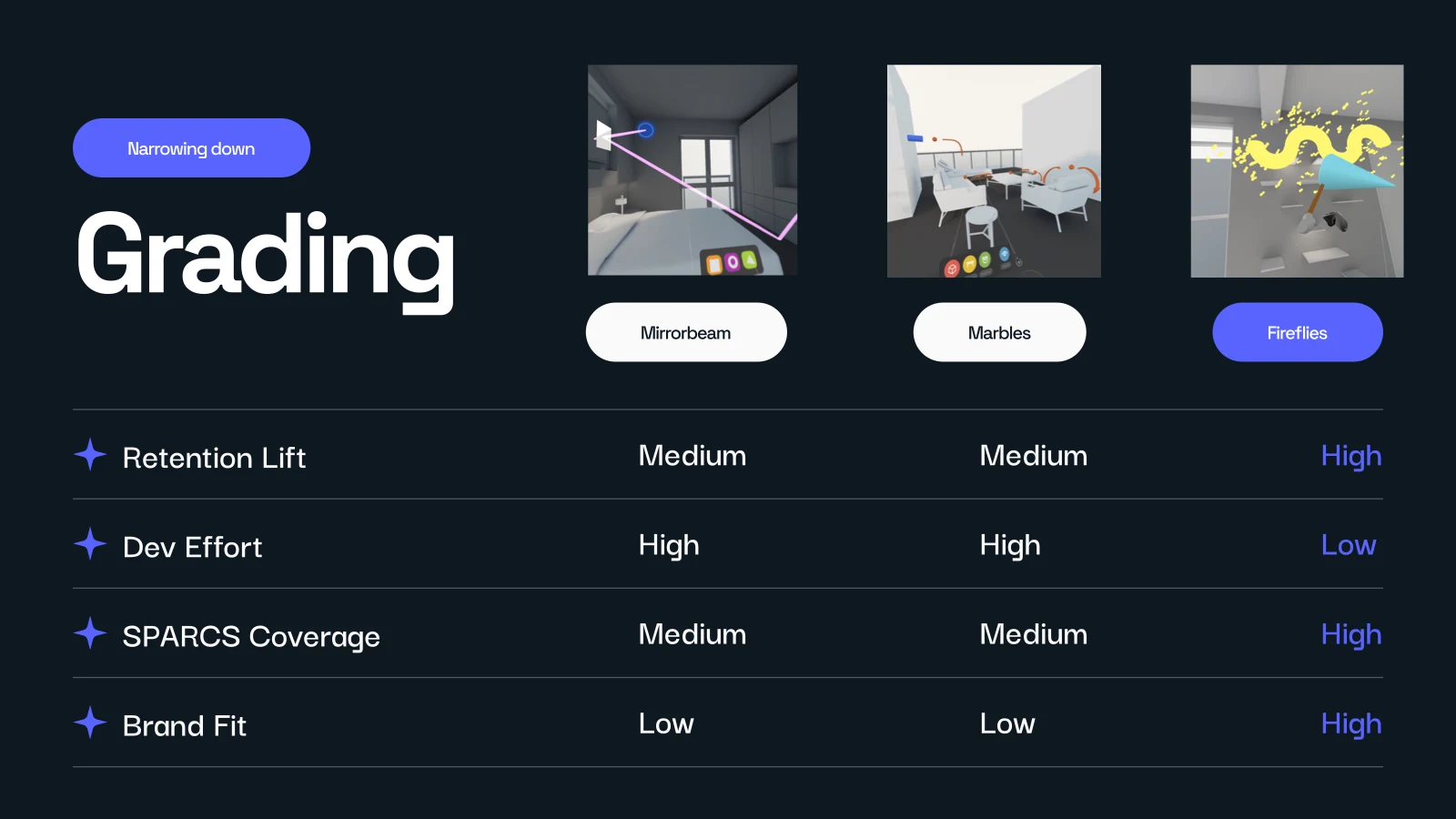
Mirrorbeam, Marbles, and Fireflies were each scored on retention lift, development effort, SPARCS coverage, and brand fit.
02sketch
Two controls to run the whole game.
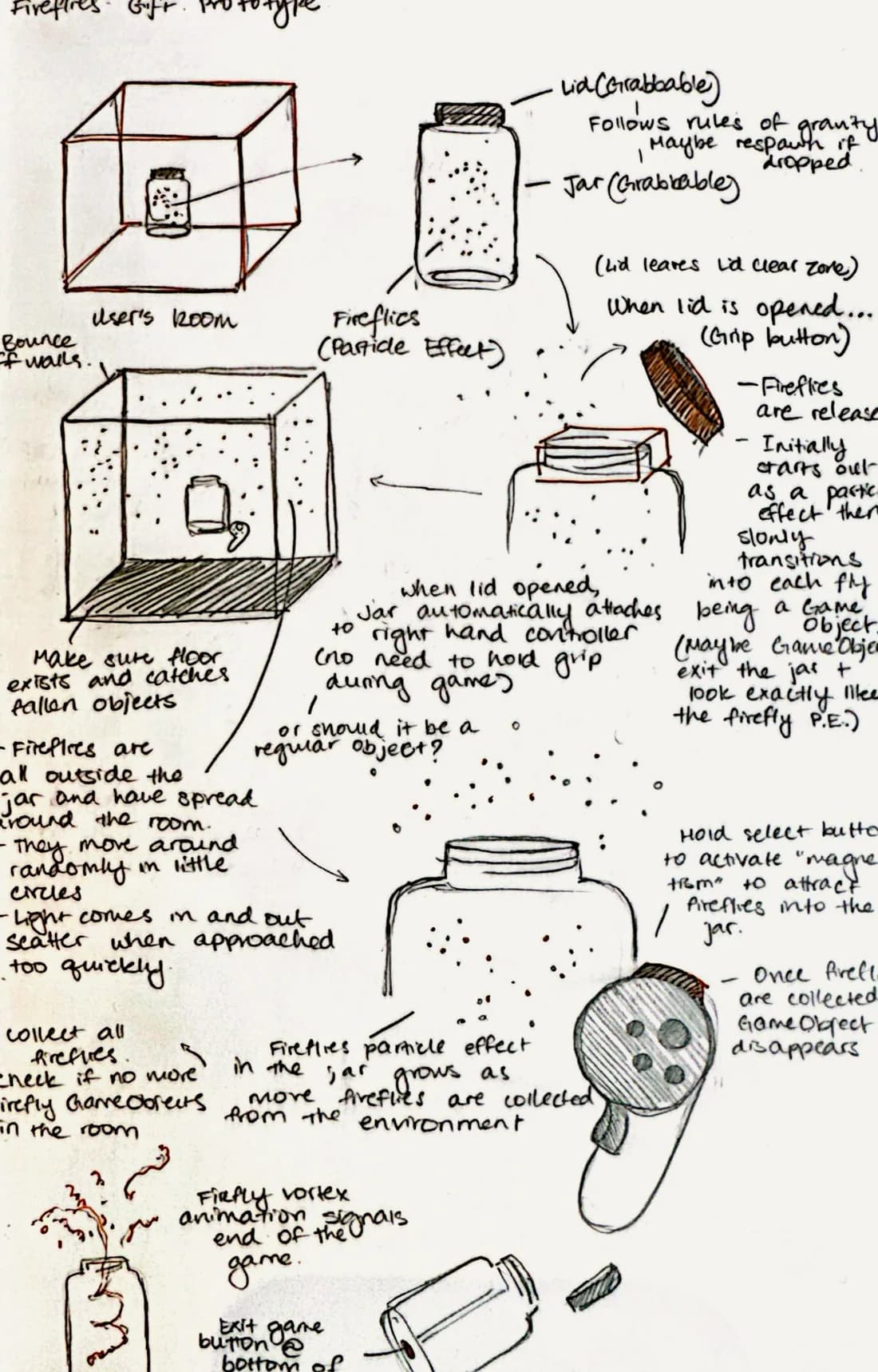
Grip opens the lid. Holding select turns the jar into a magnet that pulls the fireflies back in.
03build
Building it in Unity, alongside engineering.
I learned Unity with no prior experience and modeled the jar and fireflies in Blender.
solution
Glowkeeper is an interactive jar that gets people moving, gathering fireflies around their room in a playful way.
- ideas ranked on five criteria
- 25+
- concepts prototyped in shapesxr
- 3
- built and shipped in unity
- C#
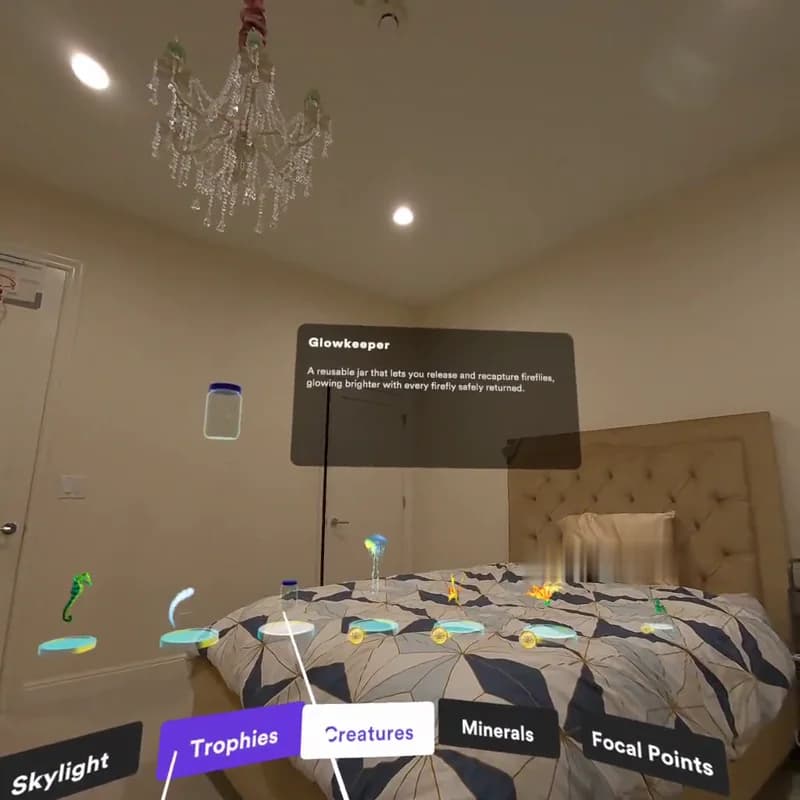
01Take Glowkeeper from Sanctum's gift box
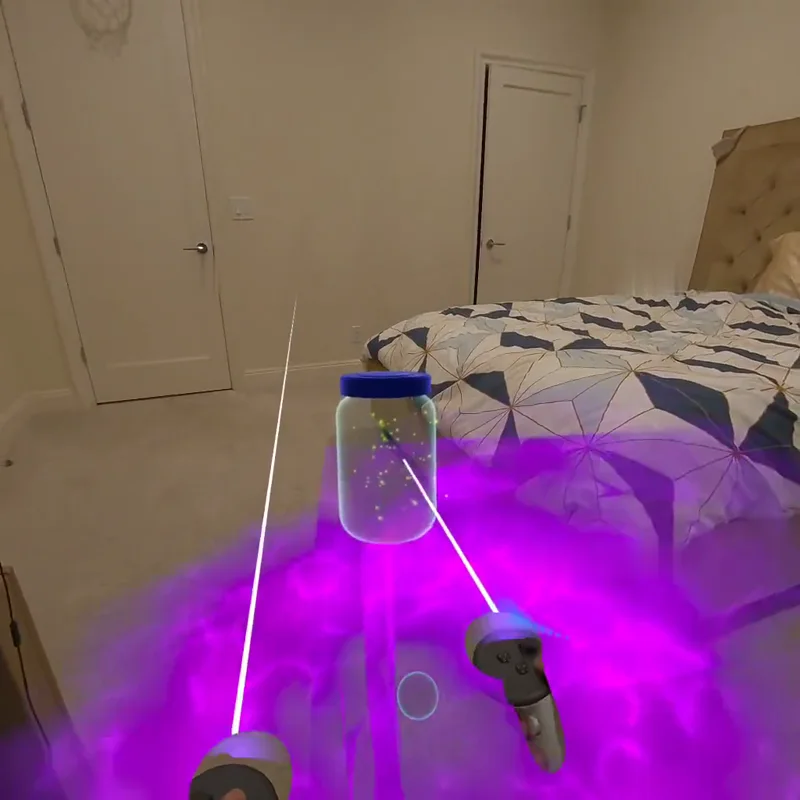
02Place the jar anywhere in the room
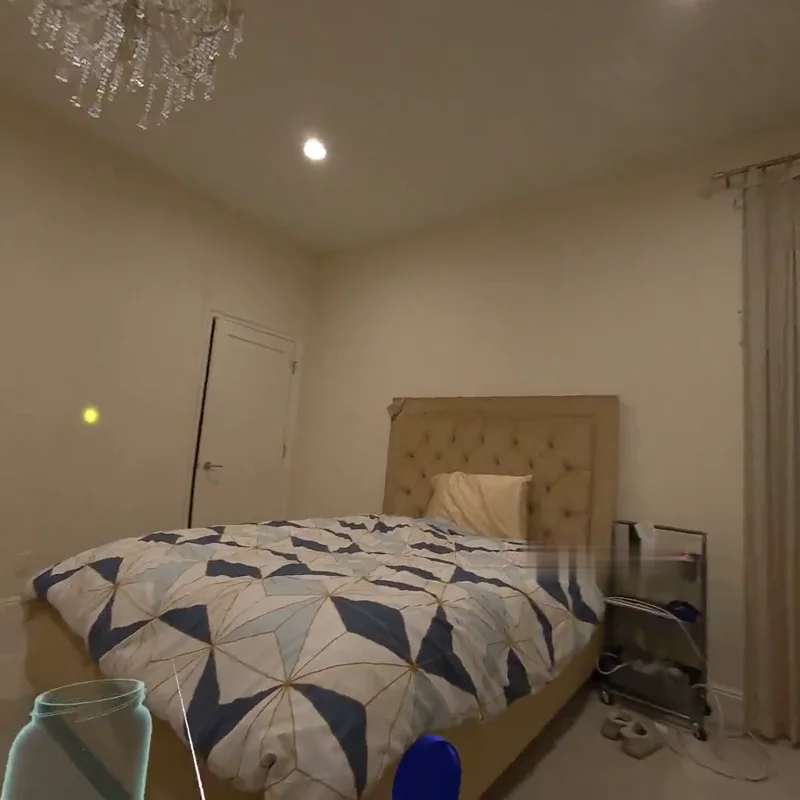
03Lift the lid to release the fireflies
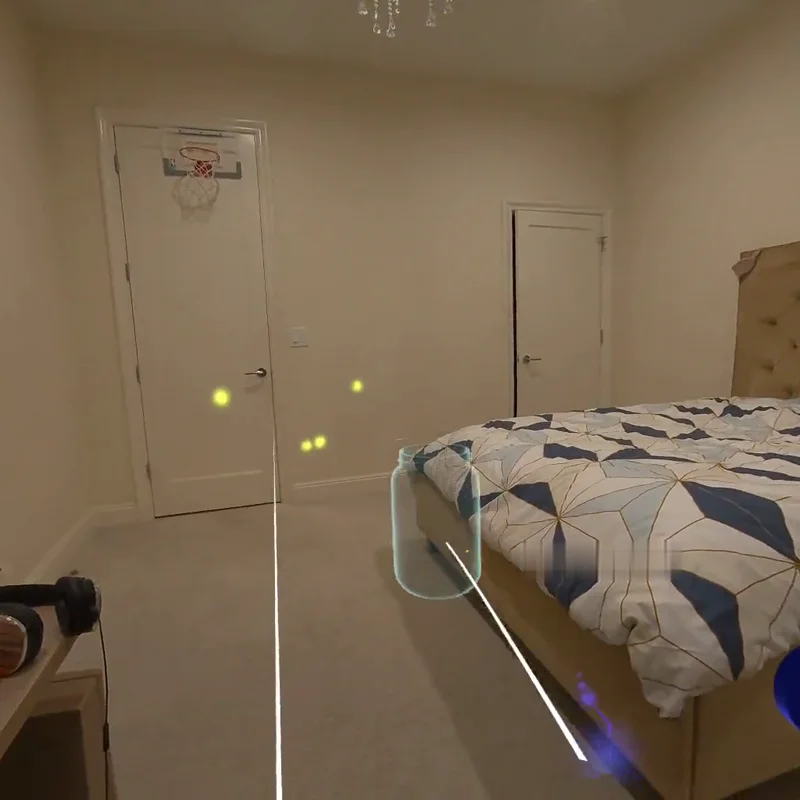
04Watch them drift through the room
They scatter if approached too quickly.
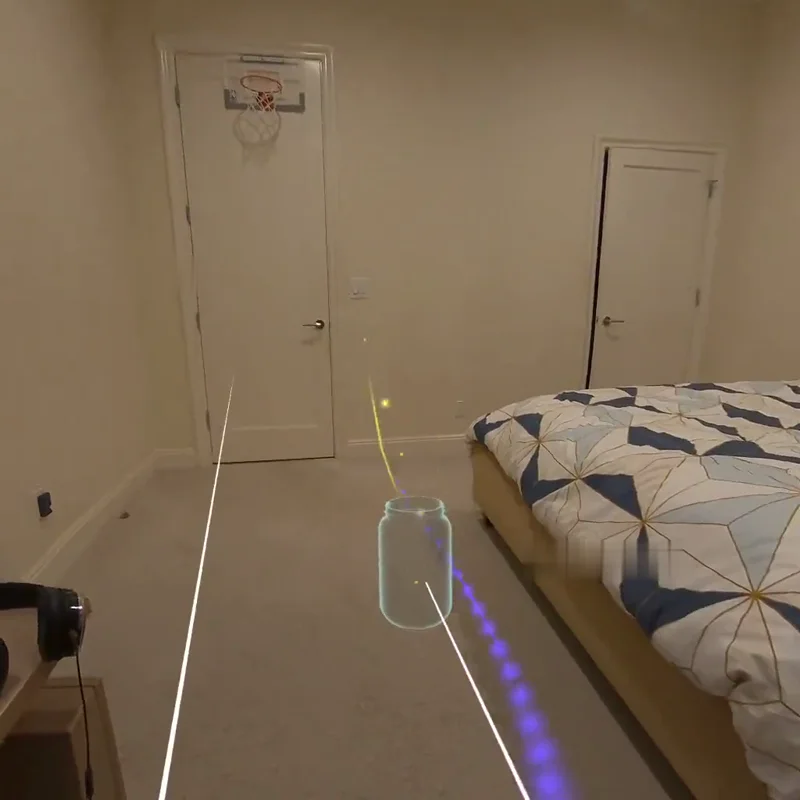
05Hold select to pull them back like a magnet
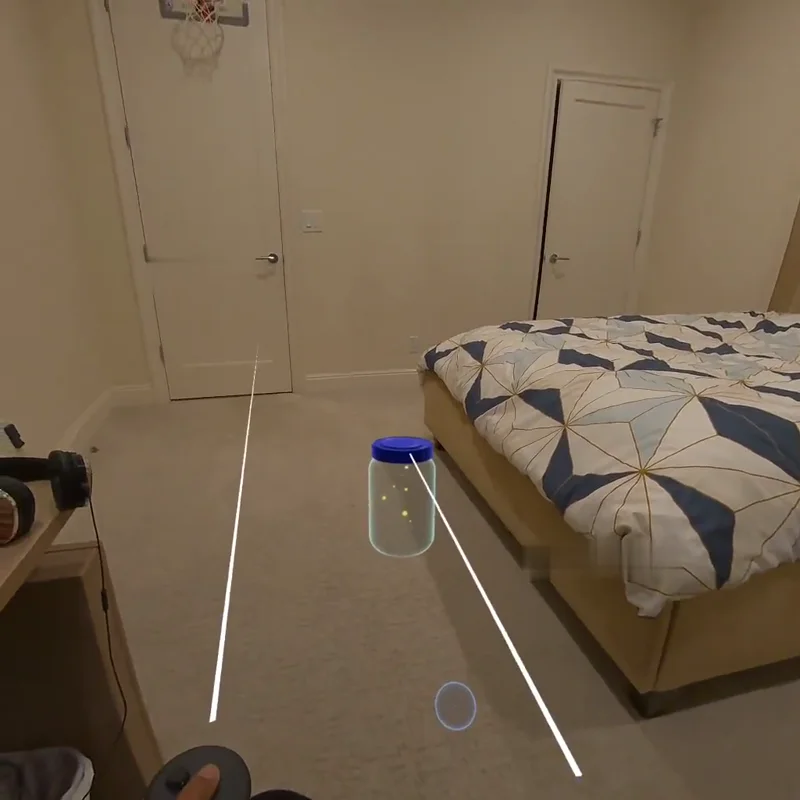
06Put the lid back on to end the game
The jar glows brighter with every firefly returned.
takeaways
- 01
Simple can win
Fireflies was the least effort to build, and it still graded highest on retention lift, SPARCS coverage, and brand fit.
- 02
Cut to the core loop
The first flow had room dimming, constellations, and a compass. Stripping it back to release, gather, and close made it easier to learn and to ship.
- 03
Prototype in the medium
Putting all three concepts in a headset with ShapesXR made the trade-offs concrete before any code was written.