Kairo
Computer-vision performance analytics for artistic sports
Role
Co-Founder · Product Manager · Designer
Timeline
Sep – Nov 2025
Team
AJ Khullar, Akshay Vadlamani
Tools
Figma, React, Cosmos, Mobbin
Solution
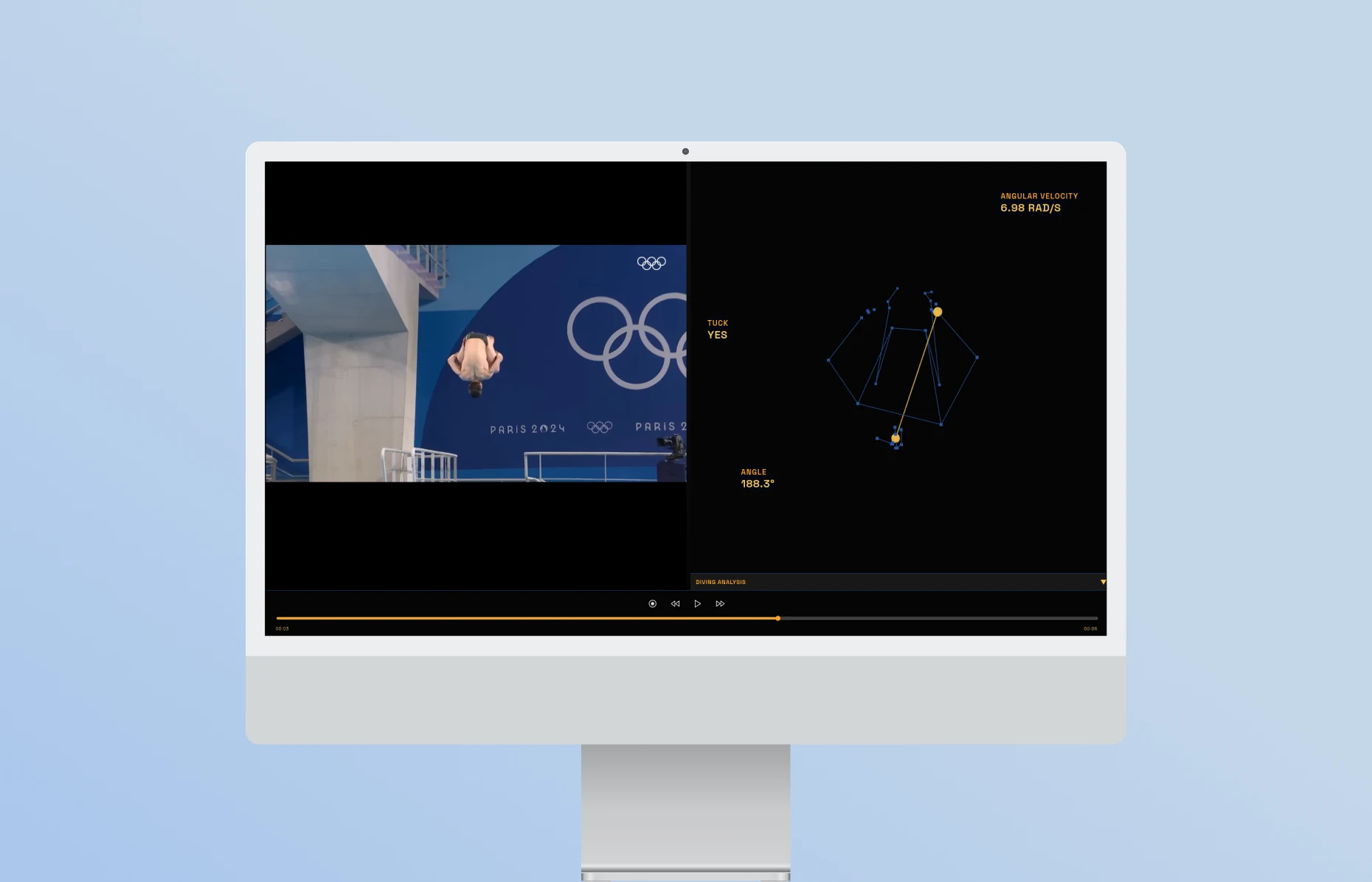
A computer-vision dashboard that gives coaches objective data, instantly — on any camera, in any gym.
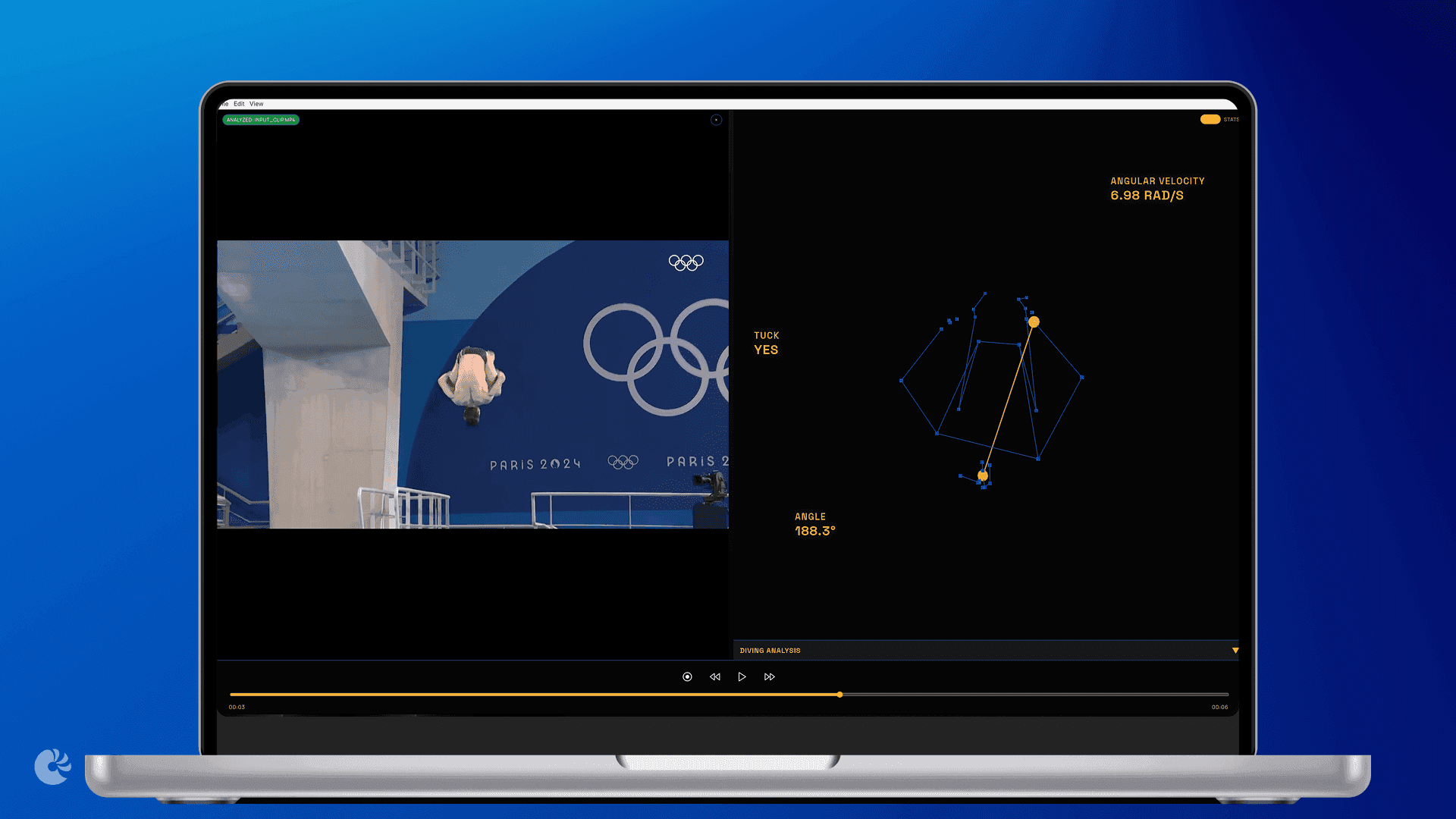
- →Real-time 3D skeleton tracking overlaid on any consumer camera feed
- →Sport-specific metrics: tuck accuracy, jump height, board depression, somersault speed
- →Frame-by-frame scrubbing with annotated body vectors and score prediction
- →Progress timeline comparing performance across sessions — visible improvement, not just scores
Artistic sports like diving, gymnastics, and figure skating are judged subjectively — a score tells an athlete how well they performed, but not what to fix or how to improve. Kairo is a computer-vision platform that translates physical performance into precise, quantitative feedback, giving athletes and coaches an objective language for training.
Kairo dashboard — video feed with real-time 3D skeleton overlay
The problem
Coaches in artistic sports have always relied on qualitative cues — 'point your toes,' 'straighten your back,' 'hold your tuck longer.' These cues work, but they're hard to measure and even harder to track over time. Athletes train for years building muscle memory without any objective record of whether that memory is improving. At competitions, a single panel score collapses hours of work into a number that offers no actionable signal. Existing recording solutions — tablet on a tripod, video on a phone — capture footage but don't analyze it. Coaches still have to scrub through video manually, form their own judgments, and translate those judgments back into verbal feedback. The feedback loop is slow, imprecise, and person-dependent.
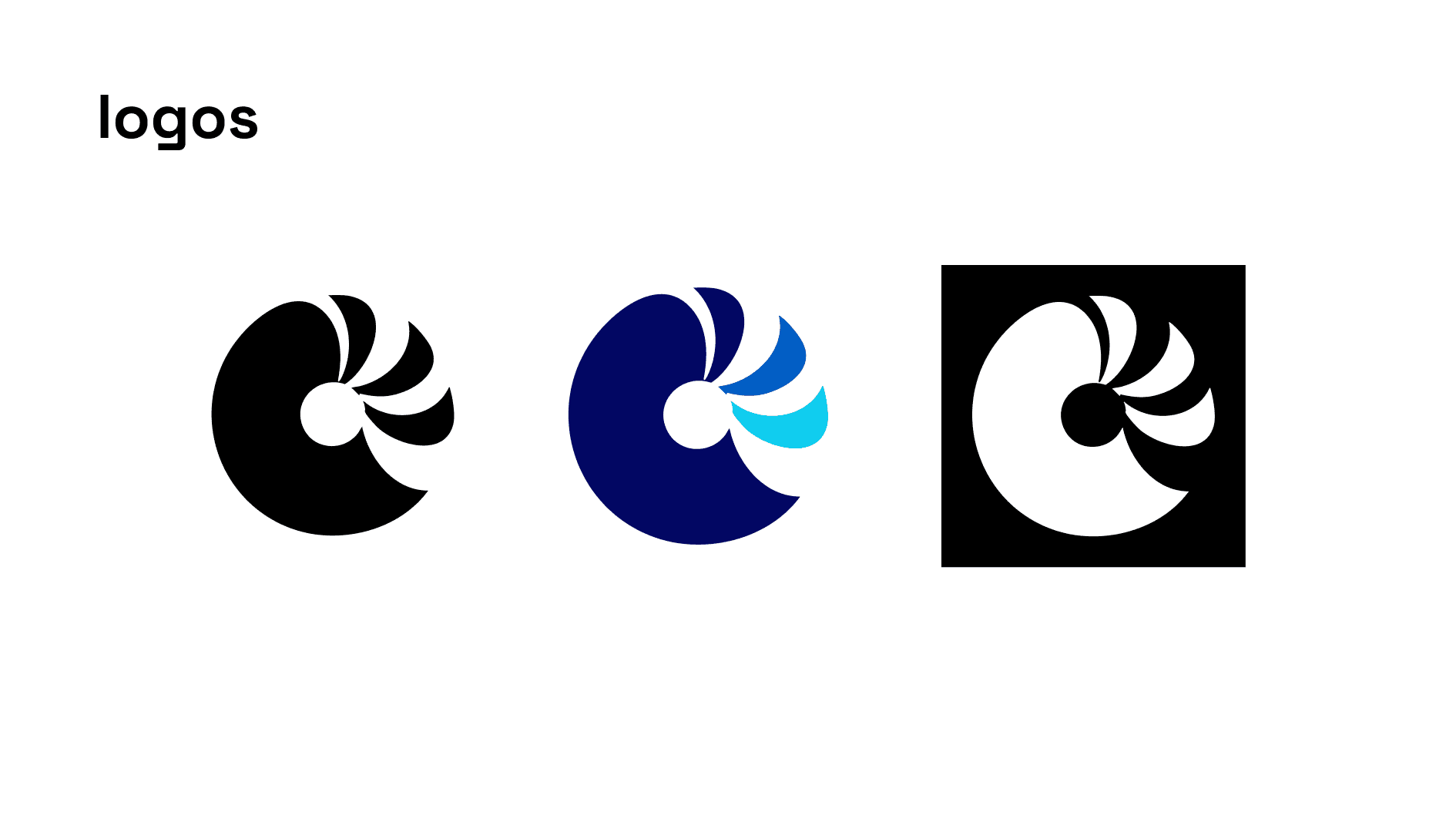
Logo explorations — diving, water, and motion-capture motifs
Research & discovery
We ran customer discovery sessions with the Head and Assistant Diving Coaches at Caltech, then expanded to interviews with collegiate and club-level athletes across Southern California. Two patterns surfaced consistently: Coaches wanted to show athletes what they saw, not just describe it. Video existed, but without frame-level annotation or comparative data, it was hard to point to the exact moment a tuck opened too early. Athletes wanted to measure progress between meets. A season's worth of training felt invisible until competition day. There was no way to know if scores were improving because of skill development or because of easier dives.
Layout iterations: video player, 3D model, and metrics panel arrangements
Competitive analysis
We mapped the existing landscape: generic sports analytics platforms, golf swing analyzers, physical therapy motion-capture rigs. None addressed artistic sports specifically. None offered real-time 3D tracking compatible with consumer cameras. Kairo's differentiation became clear — sport-specific metrics, zero hardware requirements, analysis available during training rather than after.
Metrics panel — tuck accuracy, jump height, body vector, score prediction
Branding
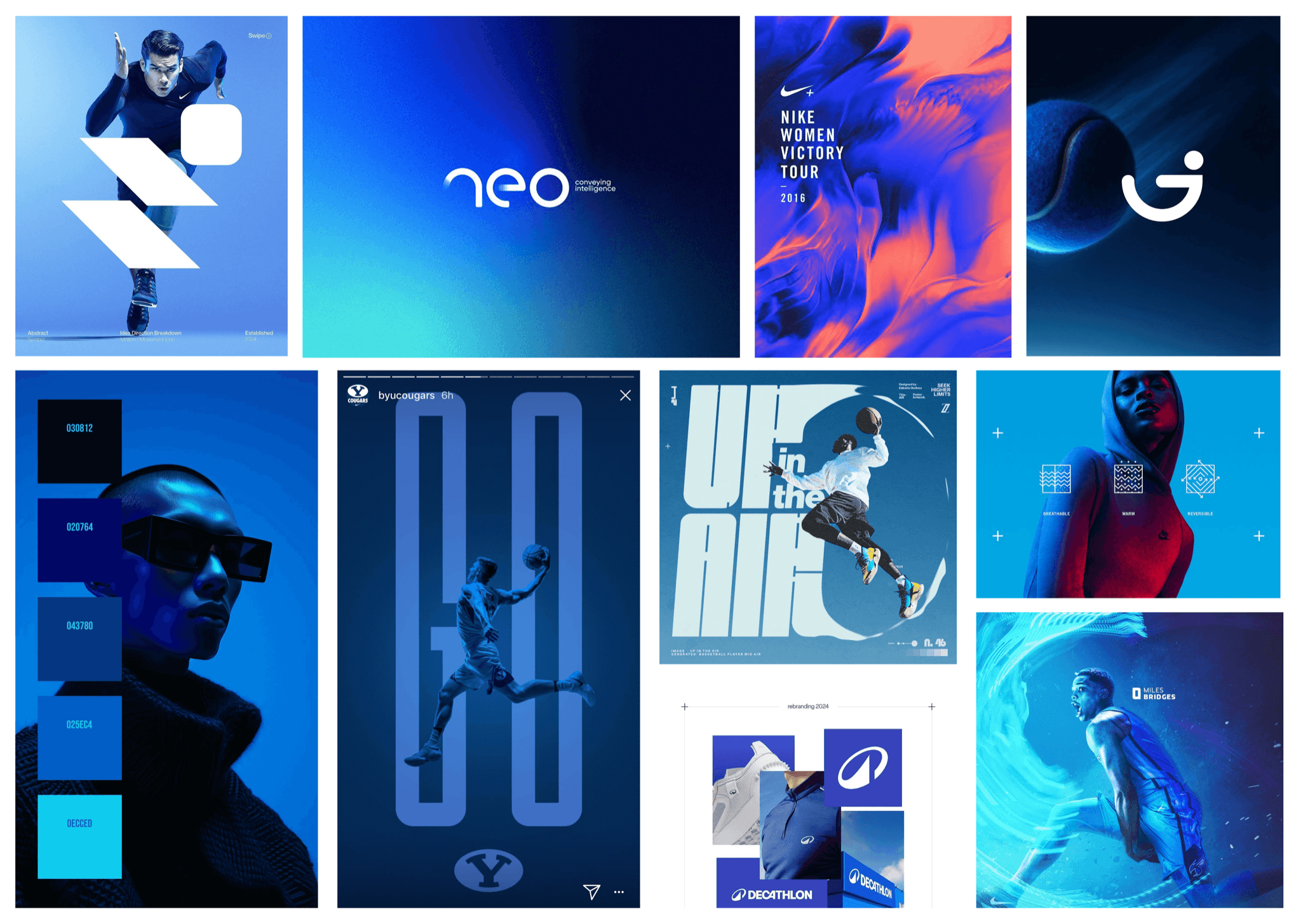
We moodboarded across Cosmos, Pinterest, and Mobbin, looking at sports technology, motion-capture visualization, and water sports aesthetics. The logo went through multiple rounds of iteration, exploring diving silhouettes, wave forms, and skeletal tracking paths. The final direction captures motion and precision simultaneously — the two things Kairo makes visible.
Information architecture & layout
The dashboard had three primary jobs: review a dive in real time, analyze form frame by frame, and track progress across sessions. We mapped these to distinct UI states rather than trying to surface everything at once. For layout, we tested multiple arrangements of the live video feed, 3D skeleton overlay, and metrics panel. The key tension was between density (coaches want data) and scannability (coaches are coaching, not reading). We resolved this with a layered hierarchy: primary metrics visible at a glance, secondary detail accessible on click.
Core features
Kairo delivers six measurement capabilities not previously available in a single tool:
- 01Real-time 3D skeleton overlay on any consumer camera feed
- 02Frame-by-frame scrubbing with annotated body vectors
- 03Tuck accuracy, somersault speed, hurdle height, and board depression metrics
- 04Score prediction based on form analysis and rule set
- 05Progress timeline comparing dives across training sessions
- 06Camera-agnostic — no proprietary hardware required
// Outcomes
$500
Angel investment
300+
Demo Day audience
1st
Diving-specific 3D analytics tool